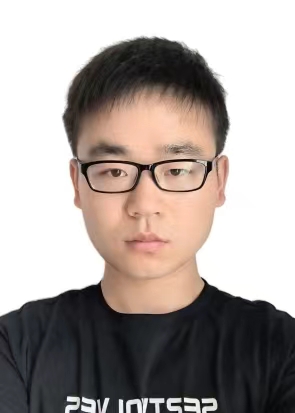
Hi, I’m Zhengxue Wang (王正学). I’m currently a Ph.D. student at PCALab, in the School of Computer Science and Engineering at Nanjing University of Science and Technology, supervised by Prof. Jian Yang and co-supervised by Dr. Zhiqiang Yan. My research interests lie in image restoration and depth perception, including depth super-resolution, completion, and estimation. If you’re interested in my work or have any questions or suggestions, feel free to reach out! 😊
📝 Publications
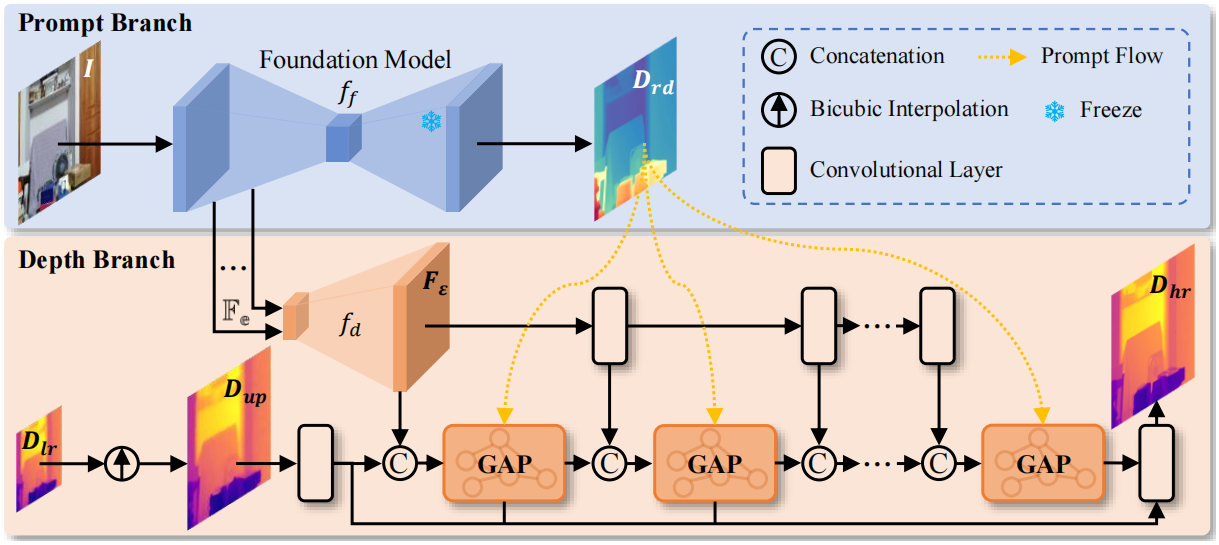
Graph-Aware Prompting Network for Generalizable Depth Super-Resolution
Zhengxue Wang, Lina Liu, Xiang Li, Zhiqiang Yan ✉, Jian Yang ✉

- We propose GAPNet, a Graph-Aware Prompting Network that enhances zero-shot generalization for depth super-resolution by leveraging foundation models as prompts. GAPNet introduces a two-stage Graph-Aware Prompting: prompt graph construction adaptively selects relevant neighboring nodes for each query, and prompt graph aggregation dynamically generates edge weights to integrate neighborhood information.
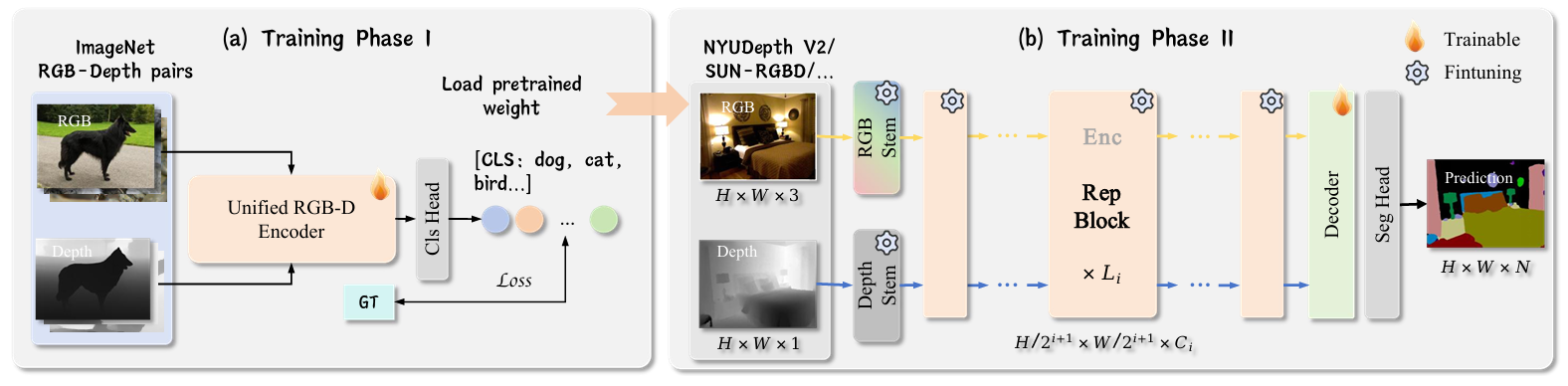
URNet: A Unified Reparameterized Network for Efficient RGB-D Semantic Segmentation
Guoan Xu,
Zhengxue Wang,
Yang Xiao,
Ligeng Chen,
Guangwei Gao,
Dongchen Zhu

- We propose URNet, a unified reparameterized RGB-D network that integrates multi-modal feature extraction and cross-modal fusion into a single encoder. With reparameterization for efficient inference, Linear Gated Attention for complementary cue exploitation, and a Pyramid Merging Decoder for effective decoding, URNet achieves state-of-the-art performance on multiple benchmarks with high efficiency.
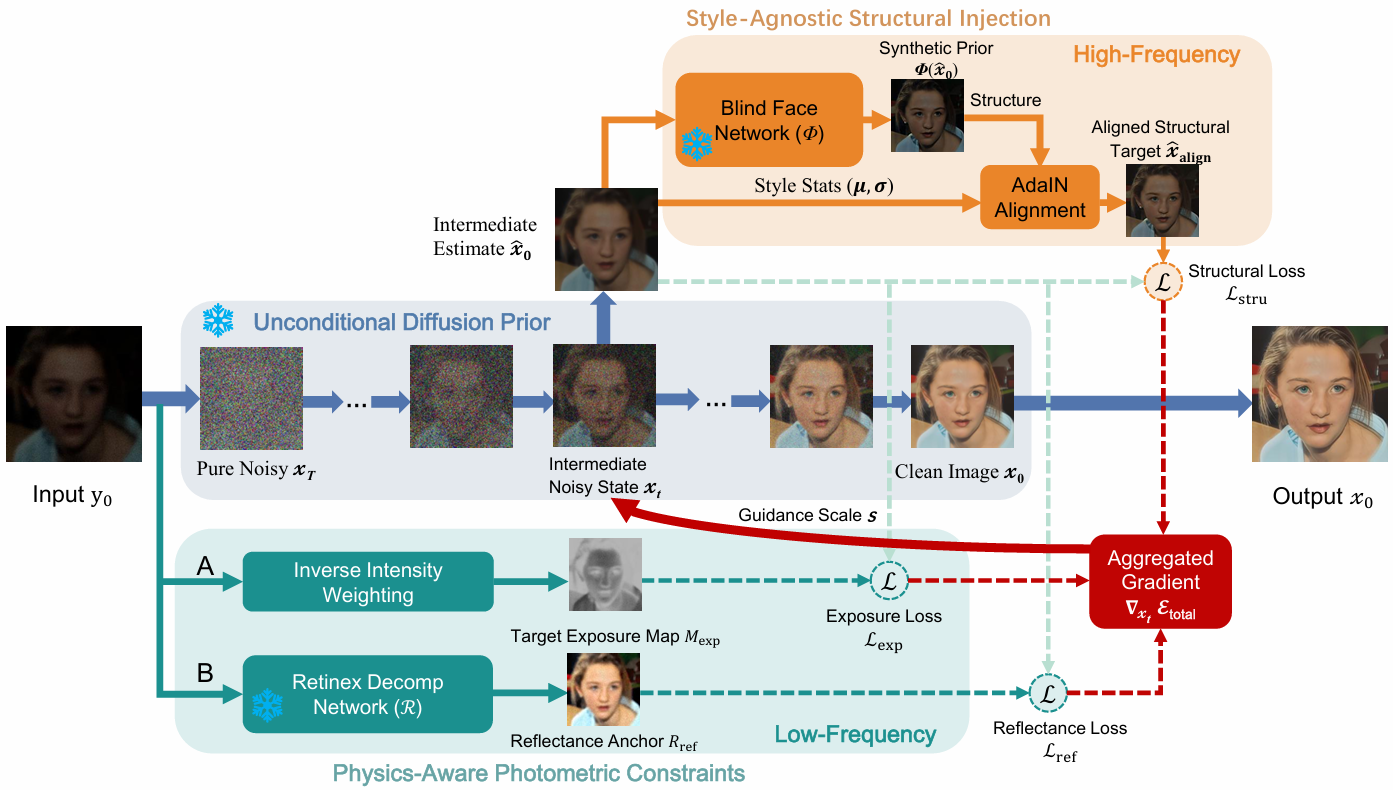
PASDiff: Physics-Aware Semantic Guidance for Joint Real-world Low-Light Face Enhancement and Restoration
Yilin Ni, Juncheng Li, Zhengxue Wang, Wenjie Li, Guangwei Gao, Jian Yang
- We propose PASDiff, a novel training-free diffusion framework for low-light face enhancement. PASDiff introduces physics-aware semantic diffusion with inverse intensity weighting and Retinex-based photometric constraints to recover natural illumination and chromaticity, while a Style-Agnostic Structural Injection module leverages off-the-shelf facial priors to reconstruct faithful identity details without introducing photometric biases.
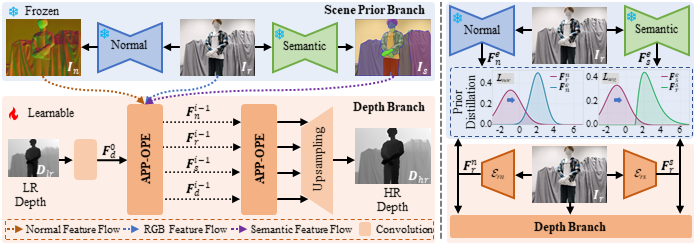
Scene Prior Filtering for Depth Super-Resolution
Zhengxue Wang *, Zhiqiang Yan *, Ming-Hsuan Yang, Jinshan Pan, Guangwei Gao ✉, Ying Tai, Jian Yang ✉
- To address the issues of texture interference and edge inaccuracy in GDSR, for the first time, SPFNet introduces the priors surface normal and semantic map from large-scale models. As a result, SPFNet achieves state-of-the-art performance.
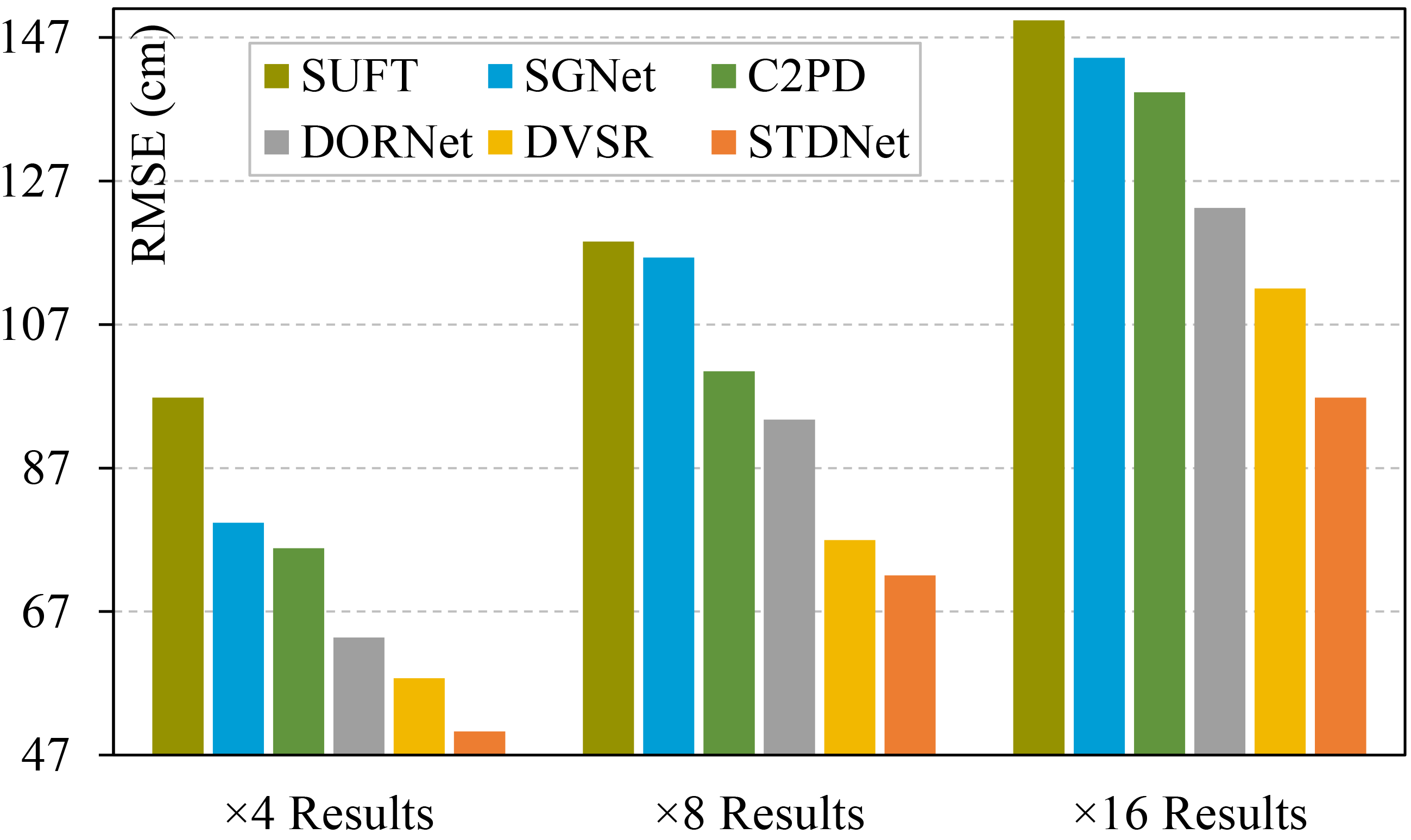
SpatioTemporal Difference Network for Video Depth Super-Resolution (Oral)
Zhengxue Wang, Yuan Wu, Xiang Li, Zhiqiang Yan ✉, Jian Yang ✉
- We propose STDNet, a novel framework for video depth super-resolution. STDNet introduces spatial and temporal difference mechanisms to mitigate long-tailed effects in video depth super-resolution. This design enables precise depth calibration and motion compensation, leading to state-of-the-art performance.
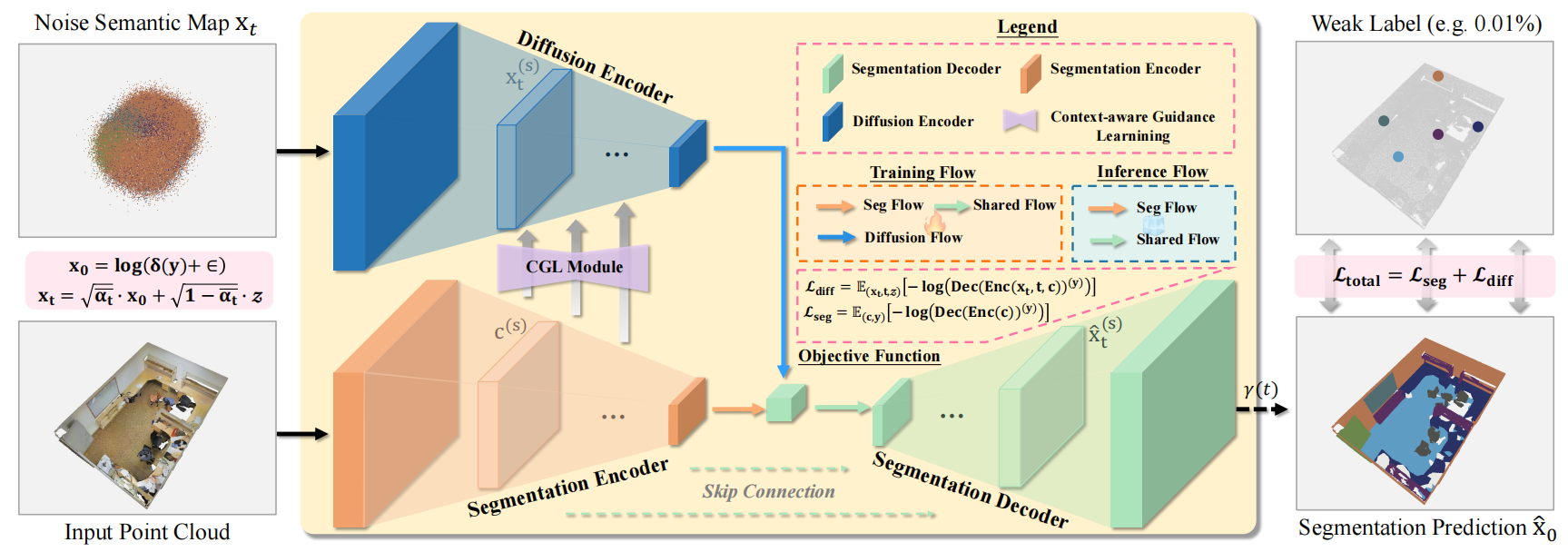
Diffusion-Based Contextual Reconstruction for Point Cloud Segmentation with Limited Annotations
Jiawei Lian, Zhengxue Wang, Wentao Qu, Haobo Jiang, Le Hui, Jian Yang
- We introduce DiCoSeg, the first diffusion-based framework for 3D point cloud semantic segmentation under limited annotation settings. DiCoSeg reconstructs contextual semantics from noisy inputs and dynamically aggregates both local and global spatial structures, thereby achieving stronger contextual awareness and robustness.
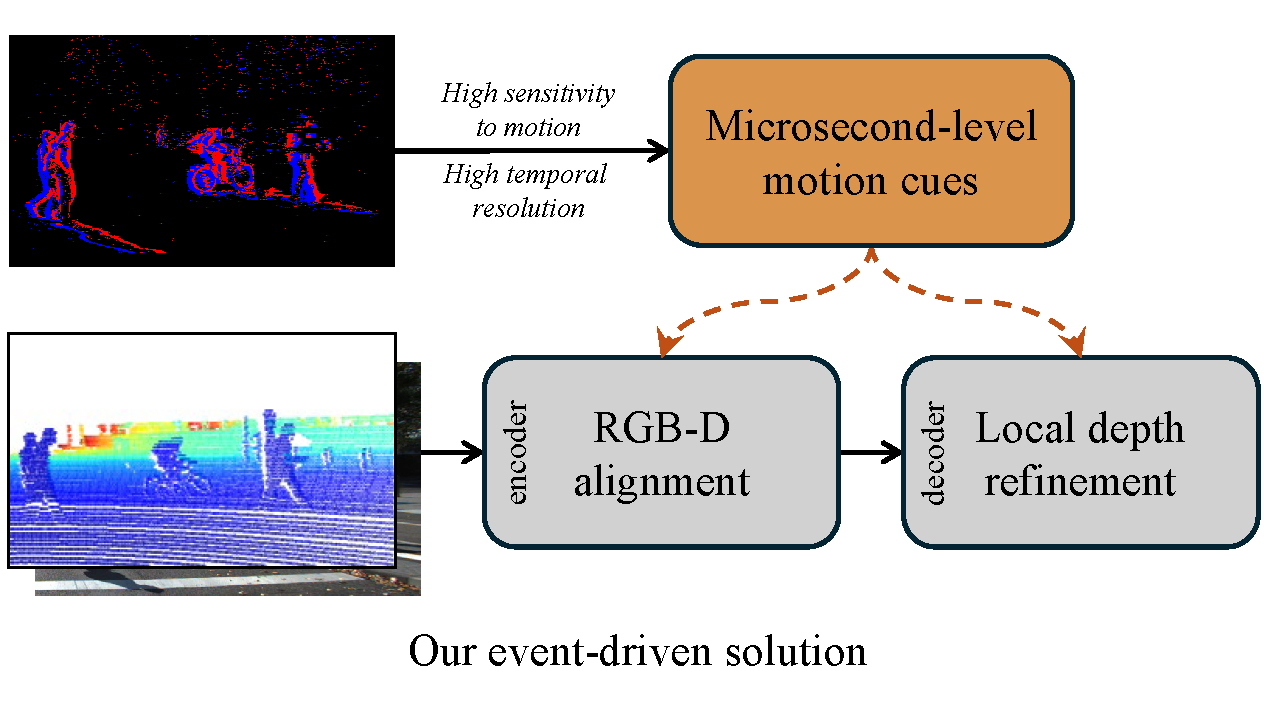
Event-Driven Dynamic Scene Depth Completion
Zhiqiang Yan, Jianhao Jiao, Zhengxue Wang, Gim Hee Lee
- We introduce EventDC, the first depth completion framework that tackles the challenges of dynamic scenes by harnessing the unique strengths of event data. To mitigate the adverse effects of fast ego-motion and object motion, EventDC incorporates two event-driven modules. Furthermore, to support research in this area, we construct the first benchmark for event-based depth completion comprising one real-world and two synthetic datasets.
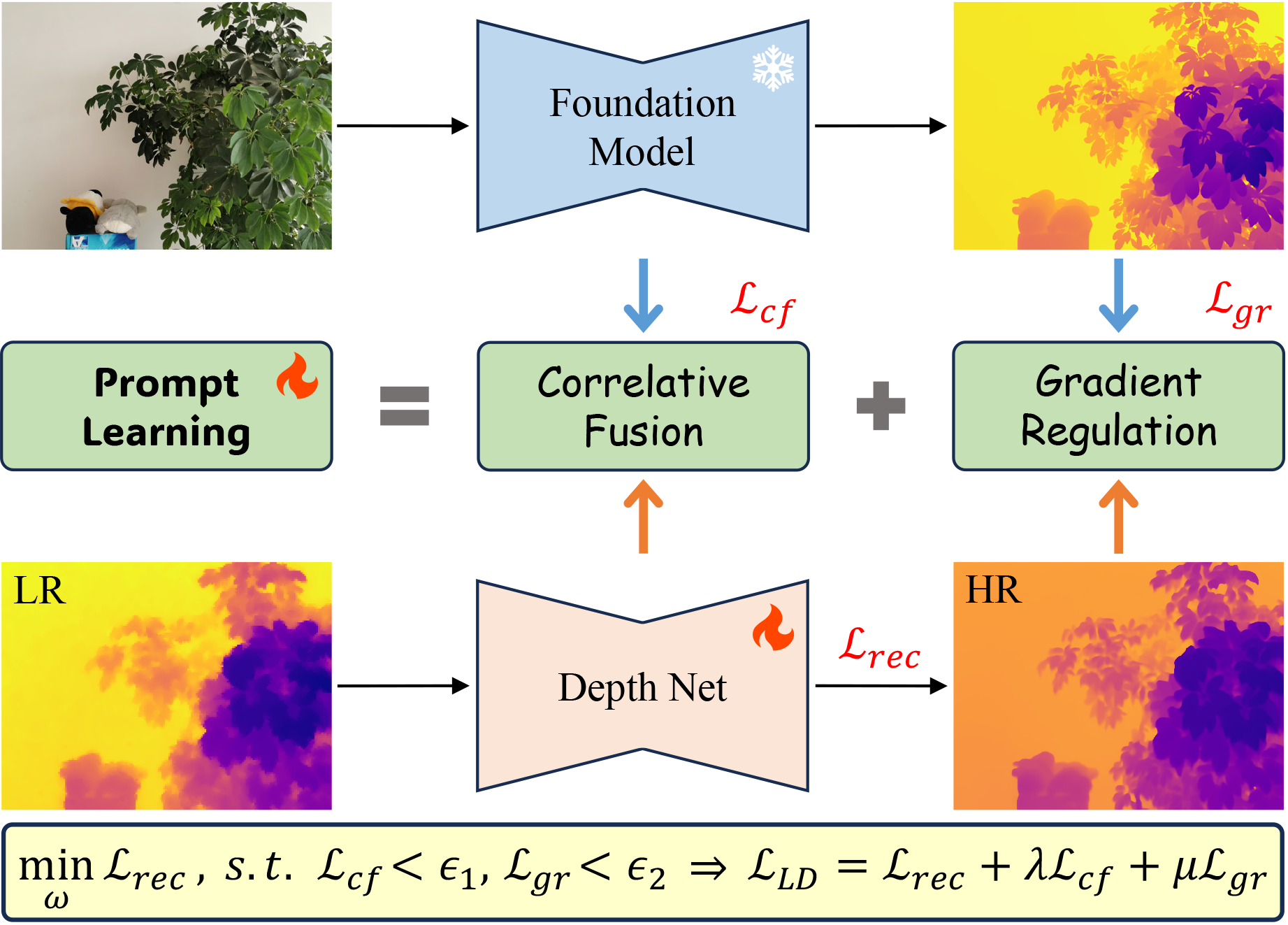
DuCos: Duality Constrained Depth Super-Resolution via Foundation Model
Zhiqiang Yan, Zhengxue Wang, Haoye Dong, Jun Li, Jian Yang, Gim Hee Lee
We introduce DuCos, a novel depth super-resolution framework grounded in Lagrangian duality theory, offering a flexible integration of multiple constraints and reconstruction objectives to enhance accuracy and robustness. Our DuCos is the first to significantly improve generalization across diverse scenarios with foundation models as prompts. Crucially, these prompts are seamlessly embedded into the Lagrangian constraint term, forming a synergistic and principled framework.
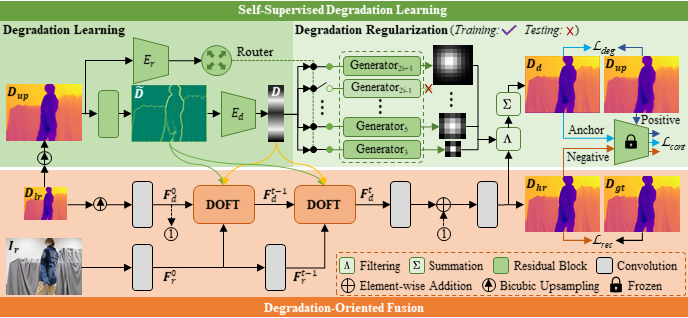
DORNet: A Degradation Oriented and Regularized Network for Blind Depth Super-Resolution (Oral)
Zhengxue Wang *, Zhiqiang Yan * ✉, Jinshan Pan, Guangwei Gao, Kai Zhang, Jian Yang ✉
For the first time, we introduce a Degradation Oriented and Regularized Network (DORNet) designed for real-world depth super-resolution, addressing the challenges posed by unconventional and unknown degradations. The core concept involves estimating implicit degradation representations to achieve effective RGB-D fusion. This degradation learning process is self-supervised.
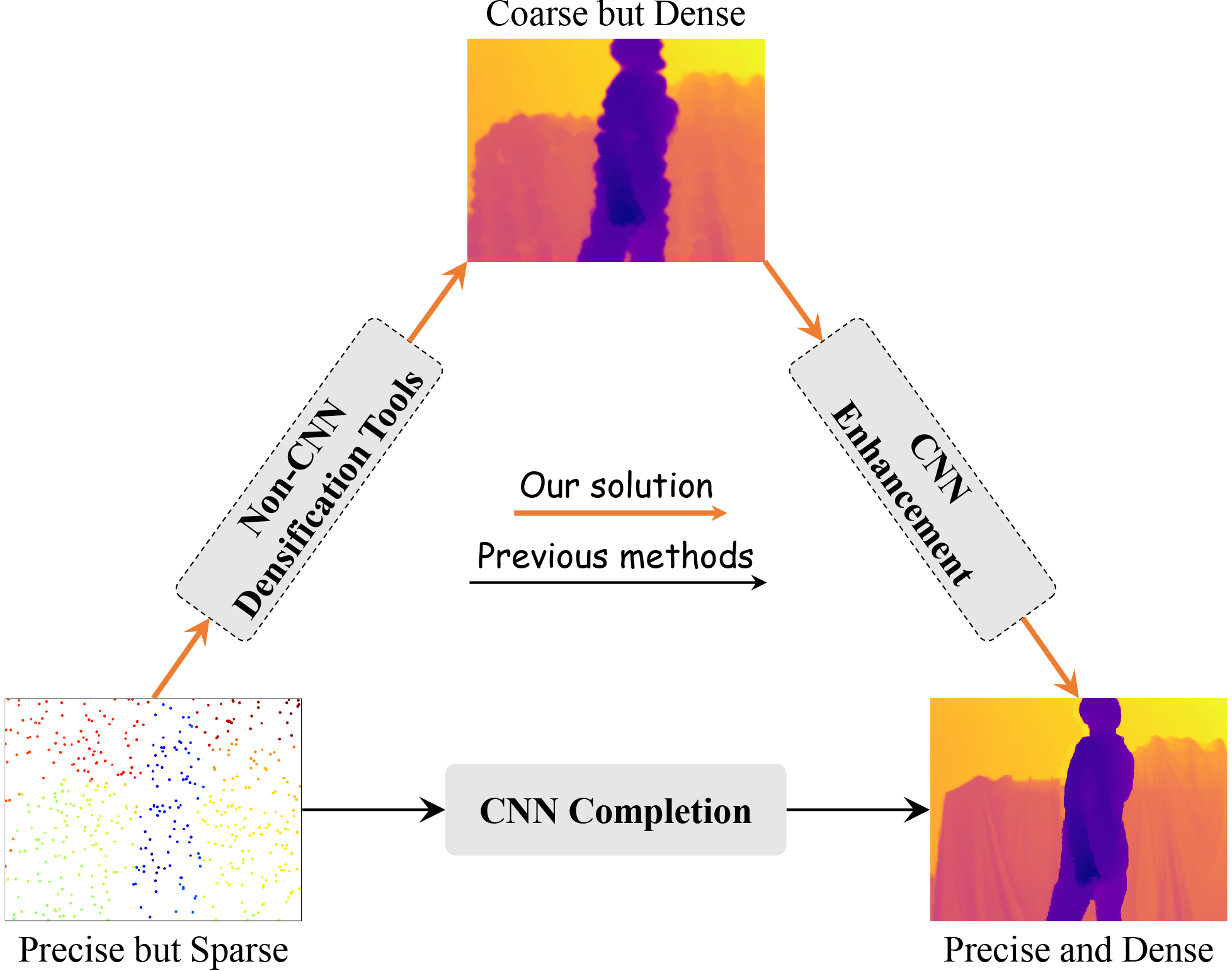
Completion as Enhancement: A Degradation-Aware Selective Image Guided Network for Depth Completion
Zhiqiang Yan, Zhengxue Wang, Kun Wang, Jun Li , ✉ Jian Yang ✉
We propose a novel degradation-aware framework SigNet that transforms depth completion into depth enhancement for the first time. SigNet eliminates the mismatch and ambiguity caused by direct convolution over irregularly sampled sparse data. Meanwhile, it builds a self-supervised degradation bridge between coarse depth and targeted dense depth for effective RGB-D fusion.
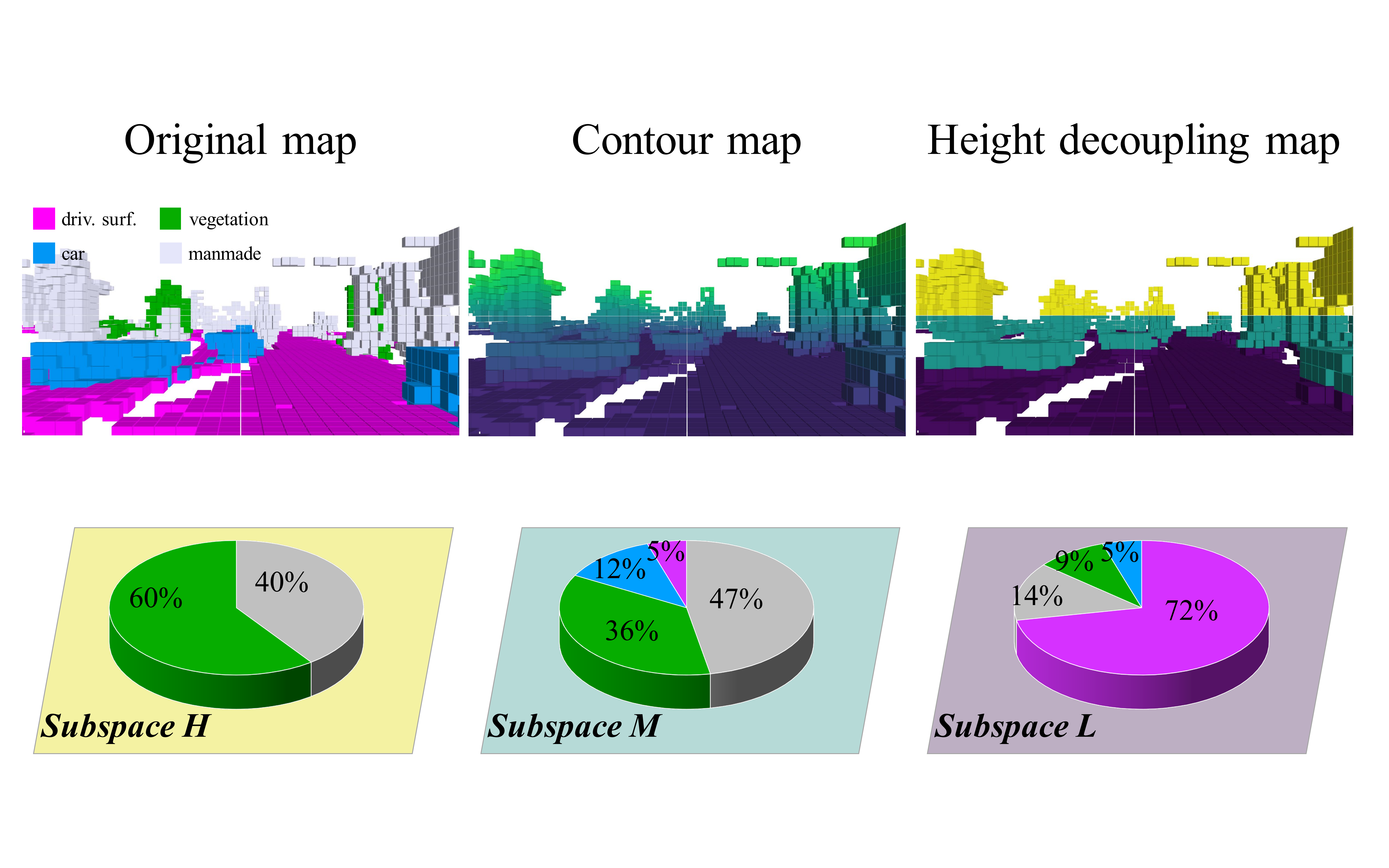
Deep Height Decoupling for Precise Vision-based 3D Occupancy Prediction
Yuan Wu *, Zhiqiang Yan * ✉, Zhengxue Wang, Xiang Li, Le Hui, Jian Yang ✉
- For the first time, we introduce the explicit height prior into the vision-based 3D occupancy predition task. Owing to the novel deep height decoupling and sampling stratagy, our model achieves state-of-the-art performance even with minimal input cost.
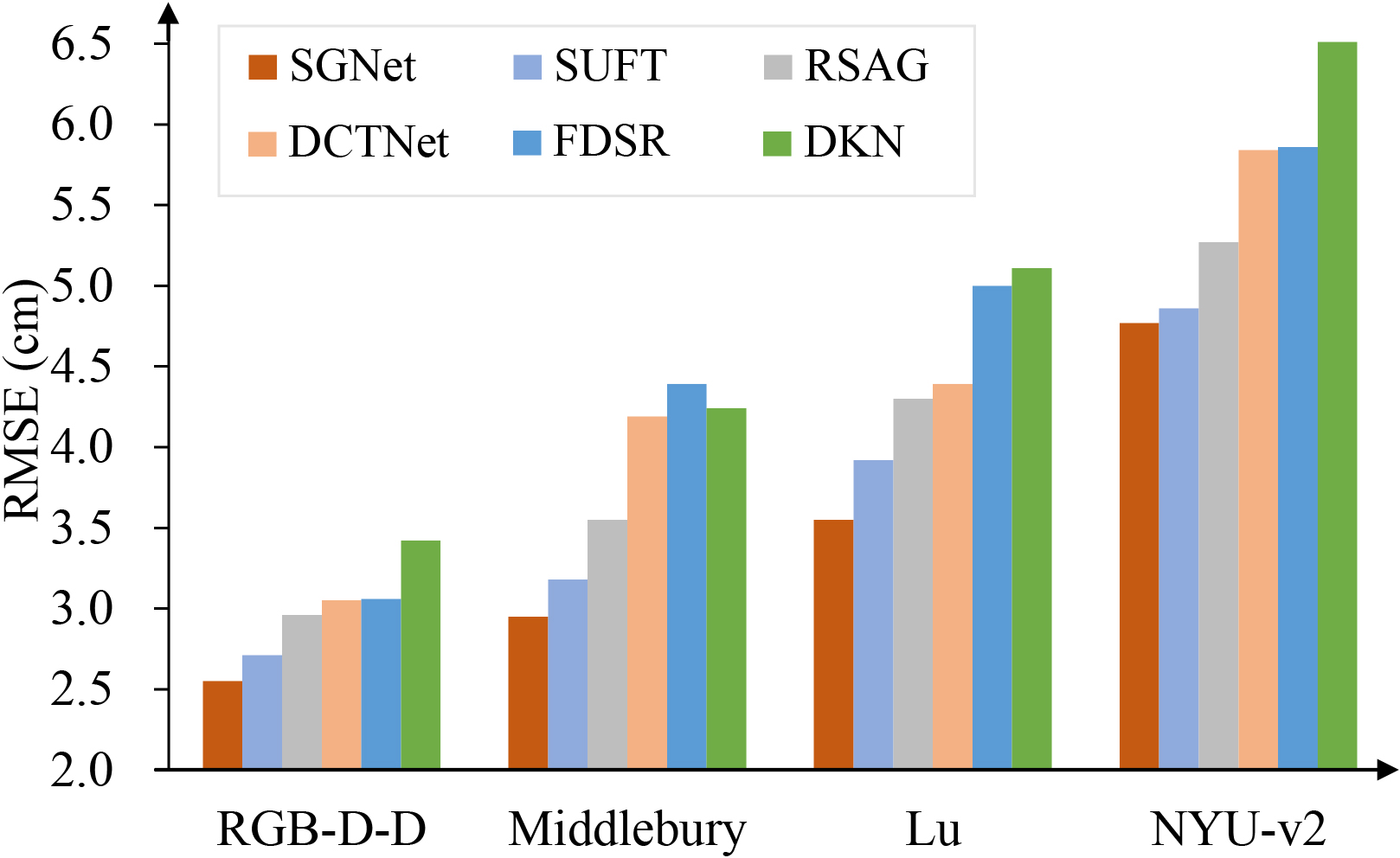
SGNet: Structure Guided Network via Gradient-Frequency Awareness for Depth Map Super-Resolution
Zhengxue Wang, Zhiqiang Yan ✉, Jian Yang ✉
SGNet introduces a novel perspective that exploits the gradient and frequency domains for the structure enhancement of DSR task, surpassing the five state-of-the-art methods by 16% (RGB-D-D), 24% (Middlebury), 21% (Lu) and 15% (NYU-v2) in average.
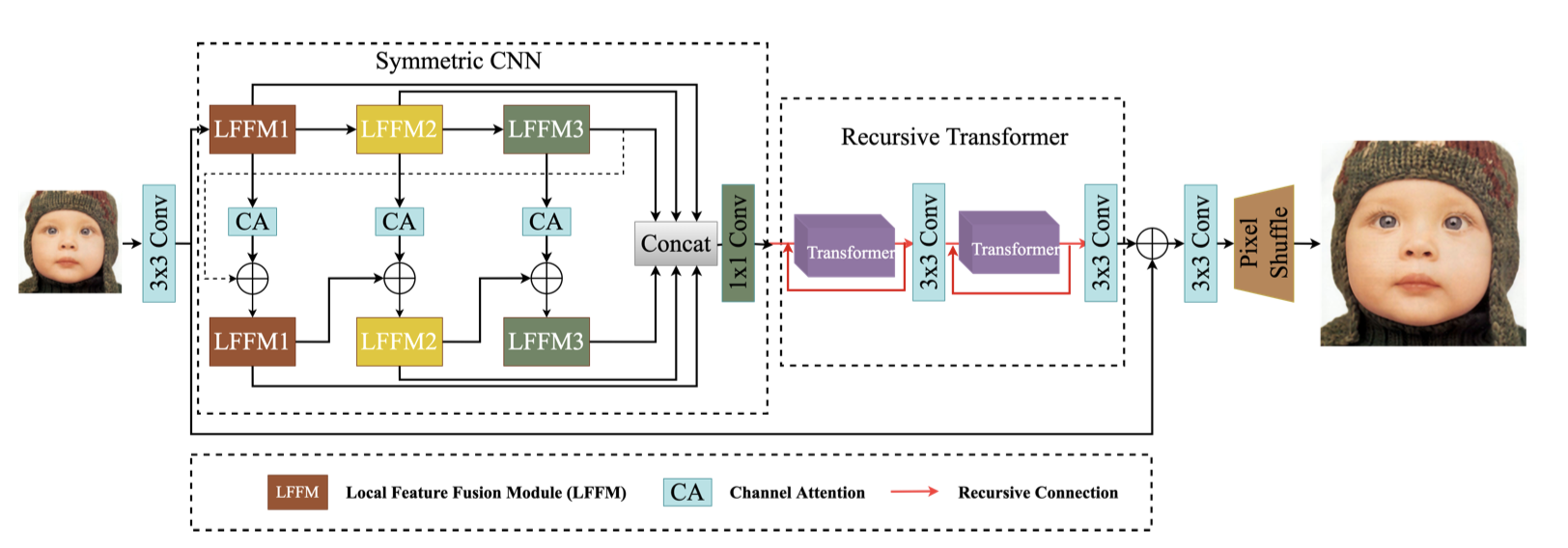
Lightweight Bimodal Network for Single-Image Super-Resolution via Symmetric CNN and Recursive Transformer (Short Oral)
Guangwei Gao *, Zhengxue Wang *, Juncheng Li, Wenjie Li, Yi Yu, Tieyong Zeng
LBNet introduces a lightweight bimodal network that integrates a CNN for local feature extraction with a recursive Transformer for global dependency modeling. It reduces computational and memory costs while more effectively enhancing texture details in single-image super-resolution.
✒️ Academic Service
- Conference reviewer: CVPR, NeurIPS, ICCV, ECCV, AAAI, IJCAI, ACM MM, BMVC, etc.
- Journal reviewer: TIP, TMM, TNNLS, PR, RA-L, etc.
📖 Educations
- 2023.03 - present: Ph.D. student, School of Computer Science and Engineering, Nanjing University of Science and Technology
- 2019.09 - 2022.05: M.S. student, College of Automation and College of Artificial Intelligence from the Nanjing University of Posts and Telecommunications